
During a recent trip to Singapore, I had the chance to tour one of the world’s most impressive public housing systems – a model that provides affordable, secure housing for 80% of its population.
Singapore’s success in this area can be traced back to its founding Prime Minister, Lee Kuan Yew, who recognised early on that access to safe and affordable housing was not just a social good but an economic necessity. He understood that giving people a literal stake in the place they live would foster social cohesion, political stability, and national pride. Housing wasn’t treated as a speculative asset – it was a foundation for nation-building. As he famously said:
“This is not just about shelter. This is about building a home, a sense of belonging, and an investment in the country’s future.”
The Singaporean Government invests heavily in public housing through the Central Provident Fund (CPF) – a compulsory savings scheme that enables citizens to use their contributions to purchase a home. It’s somewhat analogous to Australia's Housing Australia Future Fund (HAFF), though far more integrated into everyday housing access. The housing stock is managed by the Housing & Development Board (HDB), which runs regular application ballots for eligible residents. Most housing is “build-to-order,” with construction only starting once at least 70% of units have been committed.
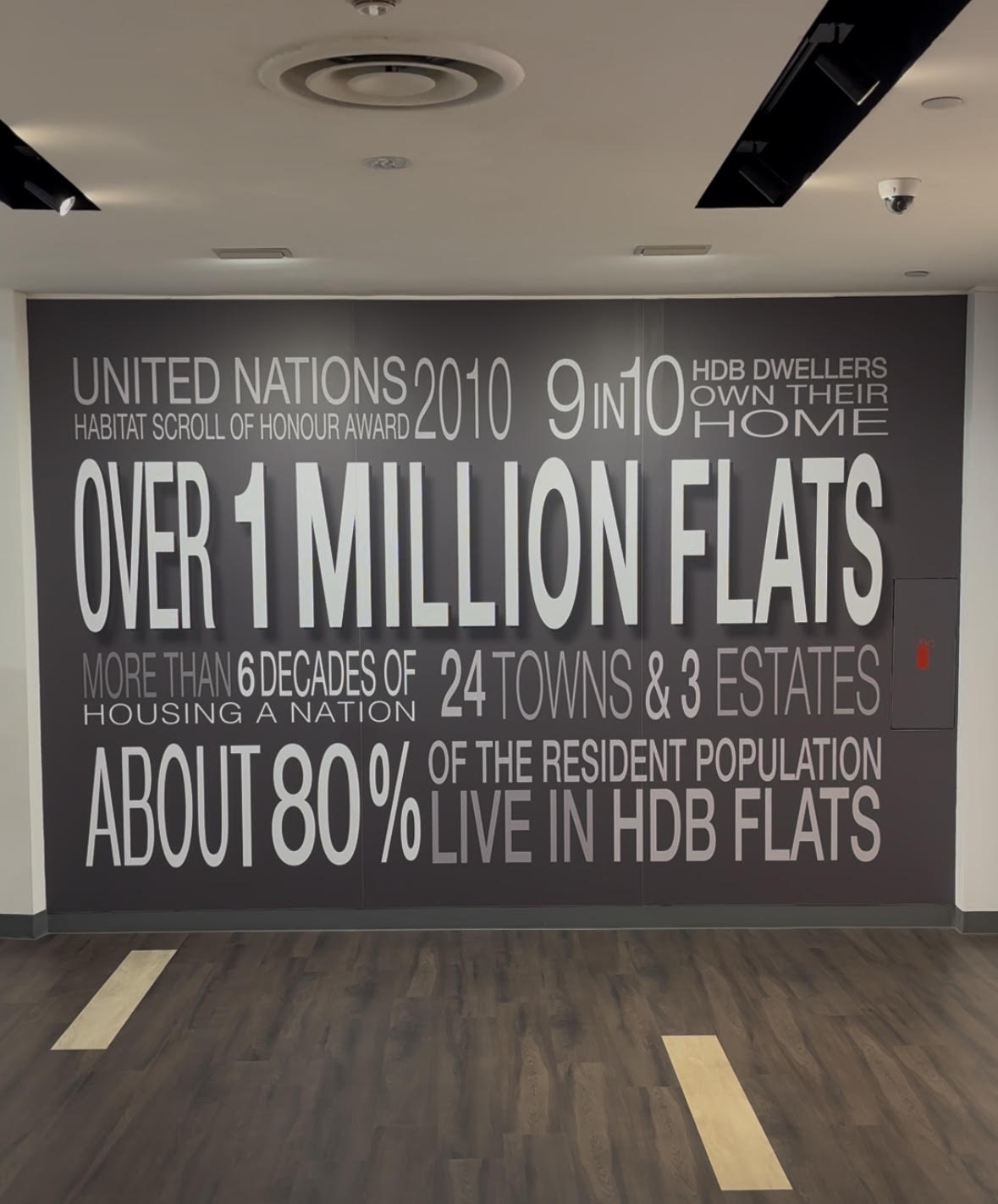
Apartments are sold below market rate, and if repayments exceed 25% of a household’s income, the government provides additional grants and subsidies. This approach has enabled over 90% of residents to become homeowners. The key condition is that buyers don’t own the land outright – they purchase a 99-year lease, ensuring long-term security while allowing for resale on the private market.
Forget any stereotypes you might associate with public housing. Singapore’s HDB estates are high-density, vibrant, and thoughtfully designed. They feature schools, shops, healthcare, community spaces, and public transport – all within walkable, green, and clean neighbourhoods.
I captured some of what I saw in a TikTok video, but a 60-second clip doesn’t do justice to the scale, ambition, and clarity of vision behind Singapore’s model.
Crucially, the success of Singapore’s public housing isn’t a happy accident. It’s the product of bold, long-term planning and, most importantly, political will. The government made housing a national priority and empowered agencies to deliver. High-density development wasn’t seen as a necessary evil but as a strategy to build inclusive, connected communities.
This stands in stark contrast to the situation in Australia.
We’re in the grip of an escalating housing crisis – especially in regional areas like my home in the Northern Rivers. Renters are being pushed out, first home buyers are locked out, and public housing waitlists are growing. Yet instead of vision and leadership, we get blame games and an entrenched resistance to the diverse, medium-density housing we so desperately need.
What Singapore shows us is that housing crises are not inevitable – they are the result of policy failure. And they are solvable, if we have the courage to act.
As a local government councillor, I know our powers over housing are limited – but that doesn’t mean we’re powerless. We can lead progressive planning reform to support medium-density housing, champion affordable and social housing projects, regulate short-term rentals, and challenge the ‘not in my backyard’ mindset that stalls change. Most importantly, we can use Council-owned land – like some of our residential holdings in Lennox Head – to deliver affordable housing for local workers. (You can read more about that in our [Housing Manifesto].)
Singapore has shown us what’s possible when housing is treated as a public good. Now the question is: do we have the political will to build something just as bold in our own backyard?
Do you like this page?